A Middle East Pause, Not a Victory: The Keys to the Region’s New Balance
By Gastón Saidman

The U.S.-led talks, under President Donald Trump, reflect what many analysts have pointed out regardless of their stance for or against the attack: the need to adopt a different perspective on the enemy.
Western military strategy is not fully compatible with the logic of attrition that defines the Middle East, where resistance plays a central role in preserving honor. If the primary objective the definitive elimination of the threat posed by Iran’s revolutionary government is not achieved, any victory remains insufficient, as it does not guarantee security.
The military pressure driven by Donald Trump can, in a sense, be considered effective: it succeeded in forcing Iran to accept a ceasefire. However, interpreting this outcome as a definitive victory would be an incomplete reading.
In the Middle East, a ceasefire does not necessarily equate to peace or surrender. Within the region’s strategic tradition exists the concept of hudna a temporary truce that does not signify the end of conflict, but rather a pause to regroup and gain time. From this perspective, Iran’s ceasefire does not necessarily indicate a structural shift, but rather a tactical adaptation. While in the West such moments are often seen as steps toward conflict resolution, in the region they tend to be understood as phases within a longer confrontation.
To understand this dynamic, it is necessary to revisit what we mean today by “victory.” Modern military academies draw, among others, on the Prussian theorist Carl von Clausewitz, who defined war as the continuation of politics by other means. Under this framework, classical victory consists of two elements: territorial control and the perception of triumph. In other words, when an army occupies a territory, the enemy retreats or surrenders, and that dominance is consolidated both materially and symbolically.
However, contemporary wars rarely follow this model. Today, conflicts often begin from the air, with strikes targeting critical infrastructure power plants, missile systems, nuclear development centers, or structures of political authority. The objective is not always immediate territorial occupation, but rather to weaken the adversary enough to force a strategic or political shift.
Recent conflicts in Gaza and Lebanon illustrate this transformation. In Gaza, ground operations began only after an initial phase of long-range strikes, delaying even the discussion of victory. In southern Lebanon, deep military presence coexisted with a paradox: while strategic positions were being secured, international pressure for a ceasefire intensified. The large-scale evacuation of civilians in certain areas may be interpreted as a tactical success, but not necessarily as a decisive victory.
Iran’s response also takes on a different dimension under this logic. Faced with significant damage to its energy, petrochemical, and logistical infrastructure, Tehran avoided immediate full-scale confrontation and instead calibrated its moves. Upon perceiving a critical threshold of deterioration, it responded with a limited offensive such as a missile barrage and then facilitated a pause in escalation. This behavior aligns with the logic of a hudna: to resist, absorb the blow, and buy time to reorganize.
Thus, while military pressure may produce visible short-term results, the real challenge is conceptual. If we fail to recognize that the adversary operates under a different understanding of war and victory, we risk misinterpreting tactical pauses as strategic achievements. This misunderstanding lies at the heart of one of the main difficulties in contemporary conflicts: confusing a temporary cessation of violence with lasting security.
Source: RTVE Noticias
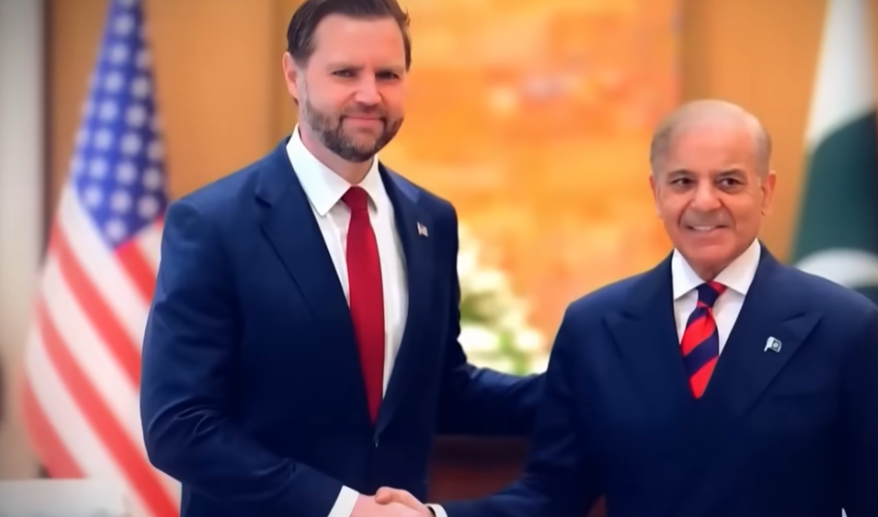
The failure of negotiations between the United States and Iran marks a new phase in the conflict. The summit in Islamabad concluded without progress, mainly due to disagreements over Iran’s nuclear program, once again highlighting the deep mistrust between the two sides.
Rather than easing tensions, the response has been increased pressure. Donald Trump hardened his stance through a maritime blockade in the Strait of Hormuz, a critical chokepoint for global oil trade. Iran, in turn, responded with direct threats, making clear that any attempt to strangle its economy could have broader regional consequences.
This scenario opens several possible paths: military escalation, renewed negotiations under pressure, or the persistence of a fragile truce without substantive agreements. For now, neither side appears to be seeking open war, but the accumulated tension suggests an unstable equilibrium.
Ultimately, U.S. strategy aims to force concessions in the nuclear domain, while Iran combines resistance and deterrence. Within this dynamic, the lack of trust remains the main obstacle to any lasting resolution.
What is happening in Lebanon?
A fragile truce amid deep tensions
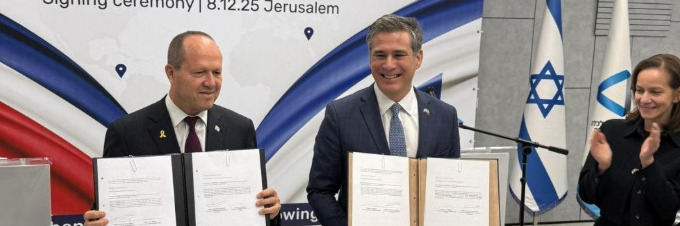
On April 16, 2026, Israel and Lebanon signed a U.S.-mediated ceasefire. Its main objective is to temporarily halt fighting and open a ten-day window for dialogue, with the aim of reaching a broader and more durable agreement.
However, this relatively positive scenario coexists with significant limitations that are not always taken into account.
Hezbollah is not only an armed actor but also a formal political force within Lebanon’s system, with strong representation in the Shiite community. In recent elections, it consolidated its position through alliances with other parties, such as the Amal Movement and factions of the Free Patriotic Movement, allowing it to maintain influence in Parliament. As a result, a significant portion of Lebanon’s political system has an interest in preserving a certain balance in its relationship with the organization.
A key factor must also be considered: Hezbollah is not a direct signatory to the agreement, despite being the primary armed actor in the conflict. This absence limits the real scope of the ceasefire and raises doubts about its sustainability.
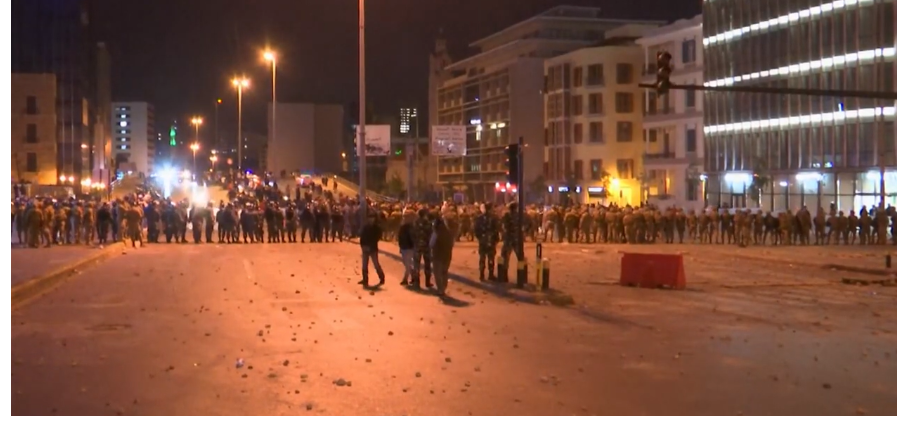
A demonstration in support of Hezbollah in the Lebanese capital.
Source: euronews (Spanish edition)
At the same time, instability in southern Lebanon has driven the displacement of young Shiites toward Beirut in search of greater security and opportunities. This phenomenon has generated criticism of Hezbollah for its inability to guarantee stability in those regions. Simultaneously, it has strengthened the demographic weight and political mobilization capacity of the Shiite community in the capital.
Conclusion
The ceasefire between Israel and Lebanon must be understood within a broader dynamic of negotiations in the Middle East: meaningful diplomatic progress, yet deeply fragile and conditioned by multiple actors.
On one hand, the agreement opens rare channels for dialogue and offers a concrete opportunity to reduce violence. On the other, its sustainability is constrained by structural factors, such as the exclusion of key actors like Hezbollah, the continuation of low-intensity operations, and persistent mistrust between the parties.
Rather than marking the end of a conflict, such agreements function as temporary containment mechanisms. Their success depends not only on the will of states but also on the inclusion of all relevant actors and the ability to transform these pauses into broader, more sustainable political processes.
In essence, what exists today is not a definitive resolution, but an unstable pause one that could evolve into a more solid process or, in the absence of concrete progress, once again escalate into military confrontation.