Is Iran Moving Closer to the Mecca Agreement? The New Geopolitical Landscape of the Middle East and the Challenge for Israel
By: Gaston Saidman
I don’t think there is anything more interesting for someone passionate about political analysis than observing and analyzing the Middle East at such an important moment, when there is an atmosphere that seems to be preparing us for interesting times ahead. This region continues to attract attention and always raises new questions.
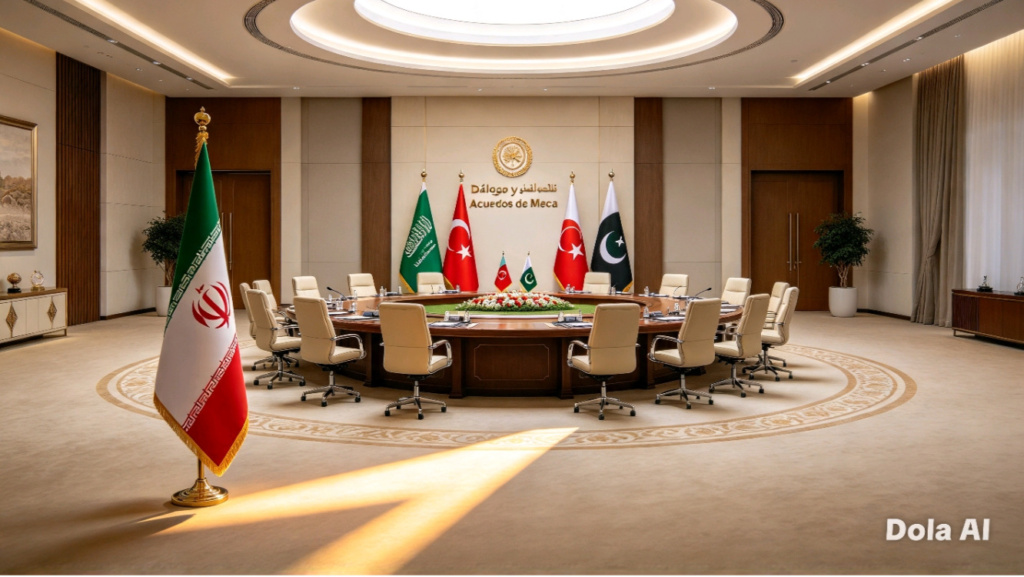
For some time now, Israel has been closely watching the development of the Mecca Agreements, a military alliance between Saudi Arabia, Turkey, and Pakistan, almost like a NATO of the Middle East.
The United States may be moving its air forces, as we saw with the arrival of fighter jets in the region, but nothing can be taken for granted yet. Trump must continue with his plan to withdraw from the Middle East and influence the region from a distance, hoping that this military alliance will be able to overcome the existing threats.
The Mecca Agreement is essentially a pact in which the parties are supposedly expected to support each other with their respective capabilities: Saudi Arabia would provide the money, Turkey would contribute its military strength, and Pakistan would supposedly bring its nuclear power into the equation. However, in reality, achieving official cooperation between the three parties when the time comes will be difficult. Each has different interests that could create new conflicts depending on the situation, and this is a problem they seem to overlook.
There is a lot of talk about this alliance, which, according to rumors, Iran is interested in joining. The question is: how would this affect its arch-enemy, Saudi Arabia? Both countries would have to overcome decades of distrust, indirect conflicts, and geopolitical differences. Furthermore, Iran’s potential inclusion would have important consequences for relations between Saudi Arabia and Israel.
Iran and Saudi Arabia
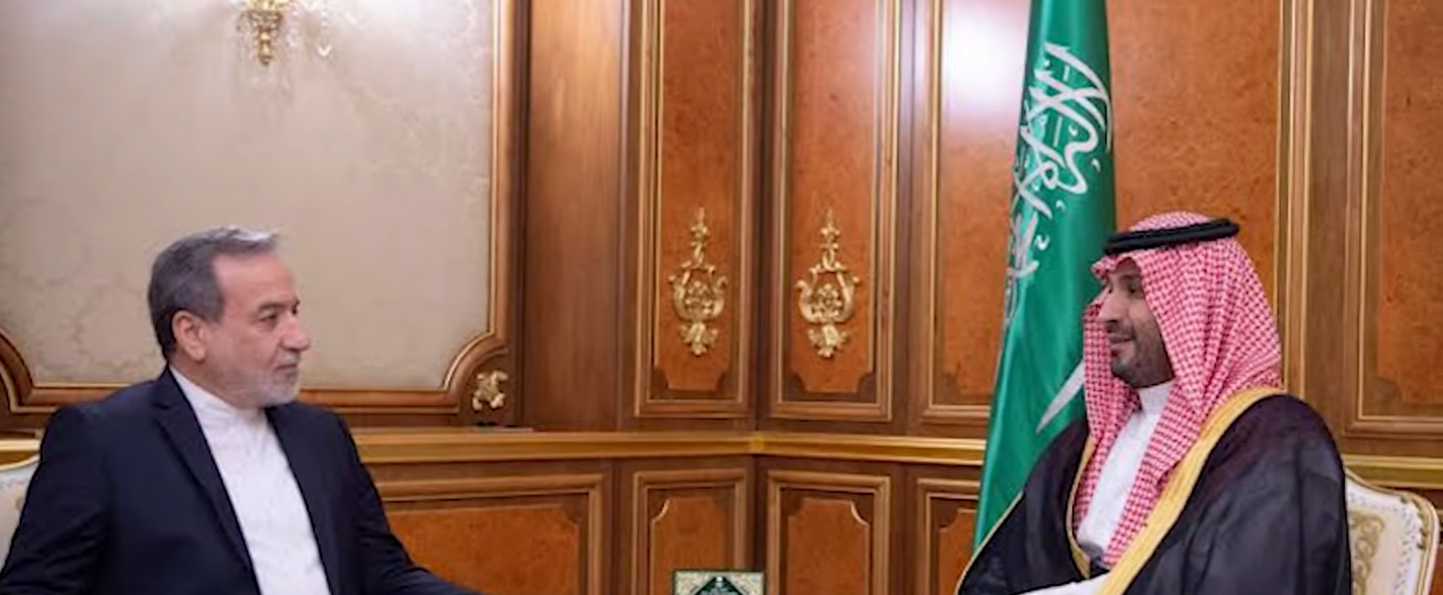 From left to right: Iranian Foreign Minister Abbas Araghchi and Saudi Crown Prince Mohammed bin Salman.
Source: NewsX World
Their historical rivalry has always been based on political influence: who would lead the Arab world, who had the best military strategy, and who held the greatest influence over Islam. We must keep in mind that the Saudis belong to the Sunni branch of Islam, while the Iranians are Shiites, with religious conflicts that go back several centuries. These differences have been present in recent conflicts such as those in Yemen, Syria, Iraq, and Lebanon, as well as in their disagreements over the security of the Persian Gulf.
This is where China comes into the picture. Through its mediation in March 2023, it managed to restore diplomatic relations between Saudi Arabia and Iran, showing that both Riyadh and Tehran could rebuild communication channels even while maintaining deep differences. That was the message: reconciliation should not be based on ideology, but rather on an attempt to reduce the risks of a regional confrontation.
Saudi Arabia’s interests
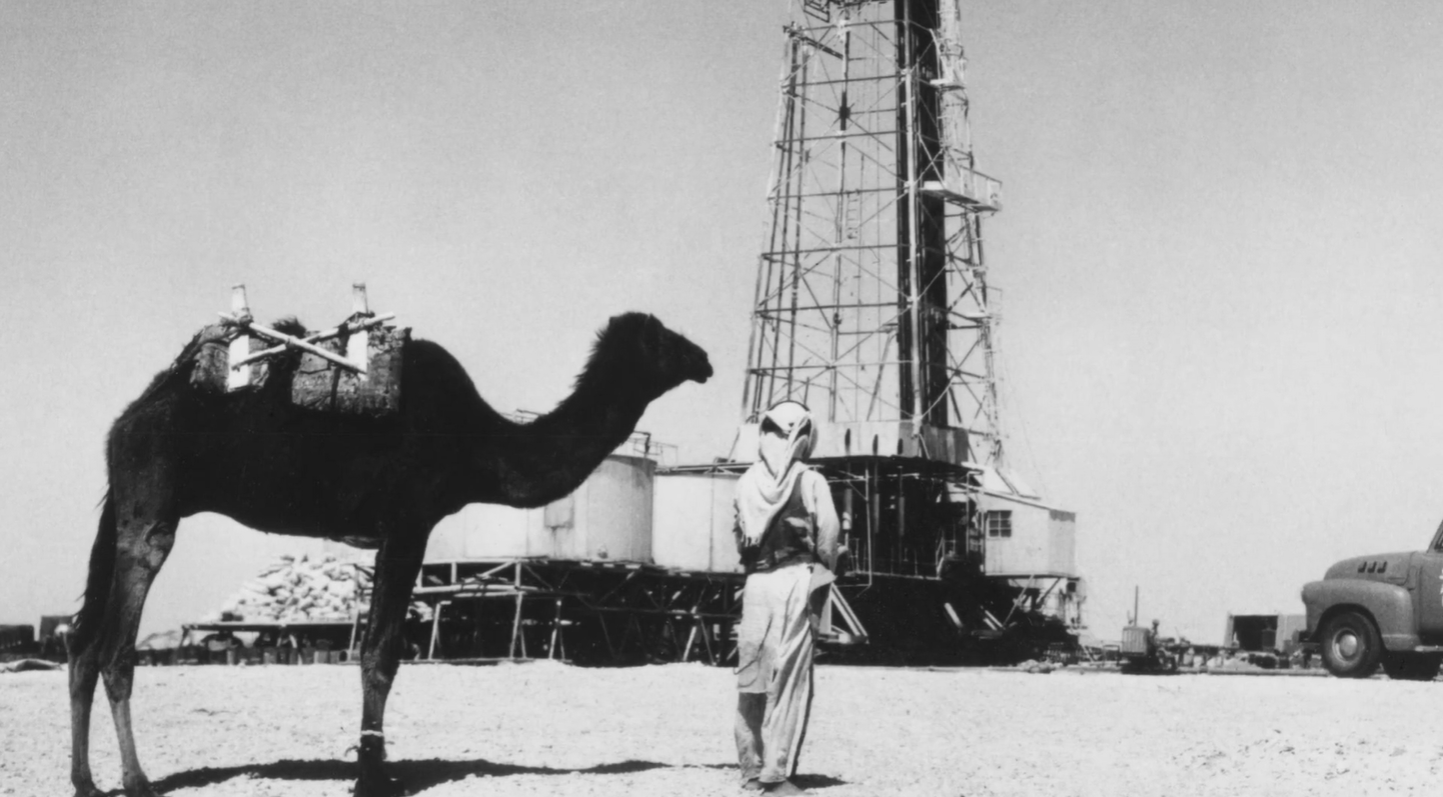
Since its beginnings, the Saudi kingdom has enjoyed great economic and political status. Its power as the world’s largest oil producer has given it an unparalleled position throughout history, making it a highly attractive partner for cooperation with the West.
 Source: HistoryPod
With the advancement of new technologies and renewable energy, the government in Riyadh understood that it needed to change its commercial strategy if it wanted to maintain its influence in the global political economy. Since then, under the current Crown Prince Mohammed bin Salman, the kingdom has experienced quite significant changes that have affected its domestic politics. These include changes in positions of power, especially regarding religious matters, which have sparked opposition within the country from those who do not particularly support the current Crown Prince bin Salman. This has created considerable uncertainty about how the current rule will survive, showing us that Riyadh also faces internal political conflicts that add to its regional problems.
Now, like any country, its priority is to protect its territory, including oil facilities, energy infrastructure, and trade routes, all of which were affected during the last war. This showed that Saudi Arabia is not as prepared to face armed conflicts as it might seem and that, without the help of the United States, it is forced to soften its position toward Iran.
This means that diplomacy can be a tool for reducing threats that a military alliance alone cannot eliminate.
The Houthis and other regional armed groups
This is where things become complicated. It is not that simple for Riyadh to accept Iran’s integration into the Mecca Pact overnight. Saudi Arabia must secure guarantees that the activities of the Houthis in Yemen and other armed groups backed by Iran will not be used to facilitate attacks against Saudi territory, as we have seen in the past.
Likewise, Iran will demand that Riyadh refrain from getting involved in attacks on Iranian territory led by the United States.
What about the nuclear program?
Just like Israel, Saudi Arabia also has no interest in seeing Iran become a nuclear power. In this regard, Iran represents a common enemy for both countries. So where would the balance lie?
Iran insists that its nuclear program has civilian purposes and that it also seeks to guarantee its own defense against possible external threats. In this context, it could reach an agreement with Riyadh to maintain a balance that would allow it to produce uranium on a limited scale. In return, Saudi Arabia could reassure its Western allies that Iran no longer represents a threat.
The question is whether Iran would actually respect such an agreement, considering that it continued enriching uranium even under IAEA inspections.
Israel and Saudi Arabia
Are they moving toward normalization?
After the Abraham Accords, discussions began about a possible rapprochement between Riyadh and Jerusalem. Unfortunately, there have only been rumors of talks that have led nowhere, even though Israel has been a country that, in terms of security, has managed to help Saudi Arabia during critical moments when it faced Houthi attacks and has also contributed to its intelligence services.
Today, with Iran becoming an ally within the Mecca Agreement and an arrangement that guarantees Riyadh’s power and security, Saudi Arabia might no longer see Israel as a relevant ally. The Iranian threat would no longer be its main concern, and Saudi Arabia would have other diplomatic tools to manage its differences with Tehran. It could even end up choosing regional agreements involving Muslim countries rather than an explicit security alliance with Israel.
Another scenario would be Saudi Arabia’s interest in maintaining good relations with the United States. Here, Crown Prince Mohammed bin Salman, Saudi Arabia’s main leader, could play an important role that would greatly benefit his image. The Crown Prince could use this rapprochement with Iran to reduce regional tensions while maintaining his strategic relationship with the United States and keeping open the possibility of establishing diplomatic relations with Israel for certain technological and security capabilities.
As we know, and as I have explained in several of my previous articles, the dispute between Tehran and Riyadh over who will lead the Arab world is also reflected in who does more for the Palestinian cause. Therefore, even if Iran were to join the pact, the Palestinian issue would remain a fundamental matter in Saudi foreign policy. This issue has complicated Saudi Arabia’s incentives to normalize relations with Israel, which is why it should not be overlooked.
If differences between Saudi Arabia and Iran were reduced, the Middle East could move toward a security system that depends less on opposing alliances. However, if this allowed Tehran to continue with its threatening attitude without providing guarantees before joining the pact, new tensions could emerge between Israel and the participating countries.
Let us hope that the West pays close attention to these developments, which, by all indications, could bring very important changes to the future of regional security. The question is whether former rivals will be able to live under the same rules, or whether we will see a reorganization of alliances in response to an increasingly complex conflict scenario.