Costa Rica and Israel Open a New Era of Economic and Technological Cooperation
By Gastón Saidman
Three years ago, we had the opportunity to interview Costa Rica’s Minister of Foreign Trade, Manuel Tovar, during a working visit to Israel. At that time, the Free Trade Agreement (FTA) between the two countries was still an initial proposal—a strategic idea aimed at strengthening an already dynamic economic relationship: from the first import of Costa Rican pineapple into the Israeli market to mutual interest in sectors such as medical devices, IT, biotechnology, and tourism.
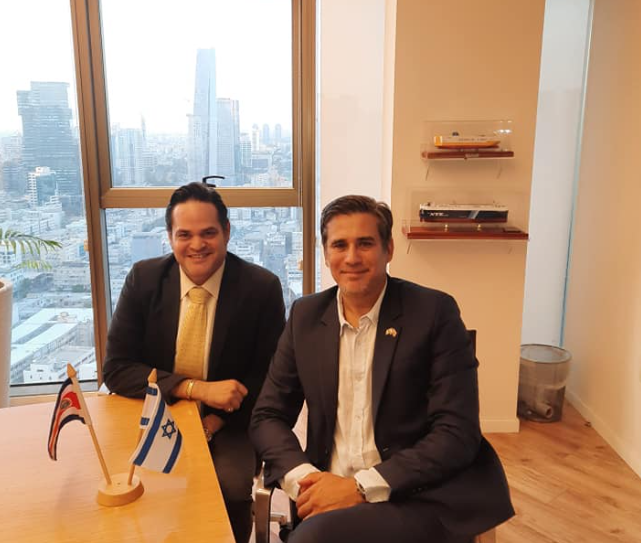
In 2022, the first interview was conducted at the offices of Allalouf & Co. Shipping Ltd.
During that conversation, Tovar expressed both nations’ desire to deepen trade, facilitate investment, and develop joint projects in high value-added sectors. He also highlighted the aspiration to move toward structured agreements—including an FTA—that would provide clear rules, greater integration, and a solid platform for bilateral growth.
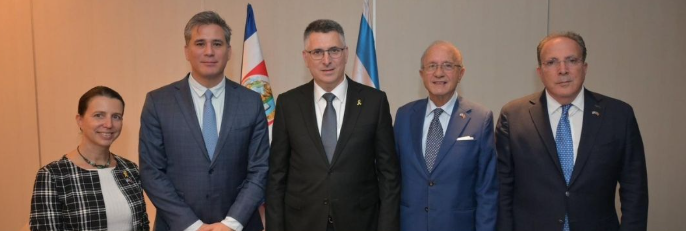
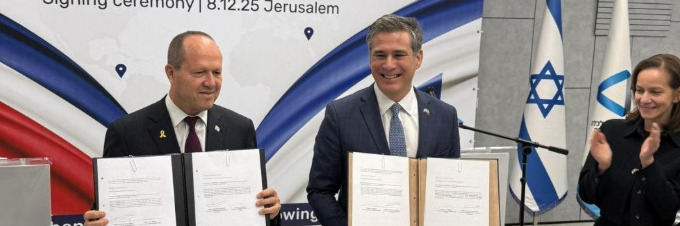
Today, two years later, that vision has materialized. The trade agreement between Costa Rica and Israel is now a reality, advancing through legislative processes and opening a new chapter in the relationship between the two countries. In this new interview, Minister Tovar explains how the agreement will be implemented, which sectors are expected to see short-term results, and how this step paves the way for broader cooperation in technology, tourism, biotechnology, security, and water management.
Interview with Minister Manuel Tovar
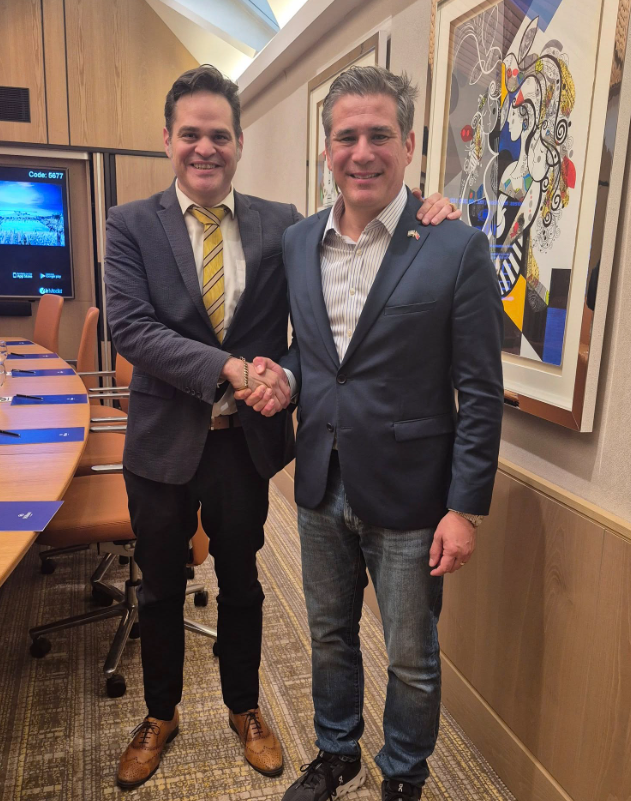
G.S.: Recently, a Free Trade Agreement between Israel and Costa Rica was established. What will be the first concrete steps to implement this agreement, and which sectors do you believe will see visible results in the short term?
M.T.: First, it is important to emphasize that the trade agreement between Costa Rica and Israel must still go through the corresponding legislative processes for ratification. It now needs approval by the Knesset in Israel and, of course, by the Costa Rican Parliament. Nevertheless, we have already begun—together with our investment and export promotion agency (PROCOMER), which has representation in Israel—to explore opportunities in both directions: investment and trade.
We have also announced the opening of a trade office with diplomatic status in Jerusalem, which I consider a very important step for bilateral relations. We have undergone a shift in our foreign policy and worldview, and this is reflected in our rapprochement with Israel and its people. This has been possible thanks to the leadership of our president, Chaves, who took office in May 2022.
We see opportunities in multiple areas: not only in pineapple, but also in coffee, sugar, and beef, which we produce under high-quality standards and will carry kosher certification. It is also essential to highlight Costa Rica’s importance in the medical devices sector, where we are a key global player. This sector is currently our leading export category and includes solutions for virtually every part of the human body.
We also see opportunities in semiconductors, an area where extensive cooperation with Israel is possible. We host Intel and have an increasingly robust ecosystem. At the same time, we must discuss services: beyond goods trade, Israel is a fully integrated economy within the global value chain of digital services such as cybersecurity and software, where Costa Rica sees enormous potential for collaboration.
G.S.: With this agreement in place, how do you envision the next stage? Do you believe it could open the door to more structural projects, such as technological alliances, tourism expansion, or new investments in biotechnology and security?
M.T.: Absolutely—that is precisely what we are aiming for; this is only a starting point. Increasing numbers of Israeli citizens are visiting us: they explore our jungles, volcanoes, and beaches. On the other hand, Israel is the Holy Land—it is the epicenter of the world. For various reasons, many people feel the desire to come to Israel; there is a perception that, in some way, we all owe something to Israel. Therefore, we see enormous potential to continue strengthening tourism, and we hope to explore the possibility of establishing direct flights between our two countries.
Beyond that, as you mentioned, we will also address key issues such as cybersecurity and nanotechnology—areas of great importance. And of course, we must aspire to cooperative projects in waste management and water administration. Although Costa Rica is a country rich in water resources, we do not always manage them properly. Israel, by contrast, despite being largely desert, has demonstrated its ability to achieve true miracles in water management. These are precisely the technologies we want to adopt and learn from.
We want to mirror Israel, and Israel can find in us an excellent partner. Our economy has experienced spectacular development, ranking among the fastest-growing in the past three years. We have broken records in exports and foreign direct investment inflows, reduced poverty, and achieved unemployment levels close to 6%. In addition, we have highly professional and productive human capital. The World Bank has recognized our progress, and today we are a country that walks with its head held high—something that fills us with pride, as it demonstrates that we are doing things right.