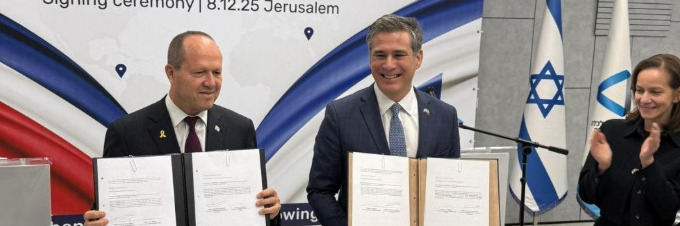
Middle East: The Chessboard the West Still Fails to Understand
By: Gastón Saidman
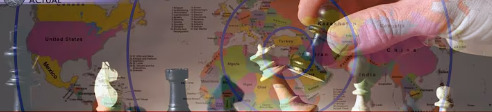
That horrific October 7, 2023, when Hamas carried out its attack against the Israeli population, could also be described as the date when the world entered a new era from which there is no turning back.
For Israel, it was evident from that very day that a military escalation on an unprecedented scale would begin. However, its mistake was believing that a massacre of such magnitude, carried out by the terrorist organization Hamas, would fundamentally change international perception and opinion regarding the Israeli-Palestinian conflict; that the world would finally understand the brutal reality of attempting to deal with the entity governing Gaza, an organization whose primary objectives include the disappearance of the State of Israel.
Nevertheless, a significant portion of international public opinion, particularly within the Western world, continues to believe that dialogue is possible with actors who may use language that appears understandable, but whose underlying values and worldview are profoundly different. This article attempts to explain those differences and demonstrate how these contrasting perceptions repeatedly lead to the same outcomes, while the international community appears unable to learn from past experiences.
Who Is the Winner?
The current conflict in the Middle East is a war in which the opposing sides have fundamentally different perceptions of what victory means. Those who support Trump’s approach argue that victory is achieved by eliminating the enemy’s ability to act, even through its complete destruction if necessary, leaving it in a state of extreme vulnerability before those capable of exerting pressure upon it.
The problem arises when that enemy defines victory not by what it has lost, but by how much it has managed to endure and its ability to remain standing.
This is the reality we are facing: the country that was attacked, in this case Iran, has not only managed to withstand the pressure but has also demonstrated to its allies that even a global power cannot easily defeat it. This should not be analyzed solely as a military advantage; what deserves particular attention is how this situation has influenced the Arab countries of the region, where Iran has sought to project an image of strength, honor, and leadership.
At the same time, Saudi Arabia and other Western-aligned countries face the challenge of preserving their prestige and influence within the region.
To understand how political dynamics operate in the Middle East, we must examine its history and analyze how the region’s diverse cultures developed and established their role over time.
If we observe how Greek culture influenced the formation of Western civilization, with great thinkers such as Plato, Aristotle, and others, we can argue that one of its most significant contributions to modern society was the development of rational thought and the search for reality through dialogue, reflection, and knowledge.
In contrast, the Middle East, historically composed of societies with strong tribal structures and family-based leadership systems known in Arabic as hamula, developed within a culture shaped by centuries of conflicts, battles, honor codes, revenge, and struggles for power.
Today, some of these elements can be observed in the attitudes of leaders such as Turkish President Recep Tayyip Erdoğan and his ambitions to restore a regional influence comparable to that of the former Ottoman Empire. However, I will allow myself to present this as a critical example: in many societies across the region, dynamics of pride, honor, and family continue to be fundamental factors influencing the decisions of their leaders.
Facing this reality is Donald Trump, who, with confidence and a strong personal presence, presents his relationships with these leaders as an attempt to show the world that he is the one controlling the game. Nevertheless, recent events appear to suggest otherwise: that in certain Middle Eastern scenarios, it is precisely the regional leaders who have managed to influence and shape Trump’s decisions.
Iran has succeeded in maintaining an image of victory by influencing how the conflict is interpreted in the West. While some Western sectors perceive certain developments as Iranian failures, Iran presents them domestically as signs of resistance and strength.
One example of this was the funeral ceremony for Khamenei, held in the city of Karbala, a location of enormous historical and religious significance for Shia Islam. There, the deceased leader was elevated by his followers to a status close to that of a sacred martyr, conveying the idea that the blows suffered do not represent defeats, but rather sacrifices that can be endured and transformed into symbols of resistance.
In this way, the death of a leader is not interpreted as the end of a cause, but rather as proof of commitment and continuity in the struggle.
The Hypocrisy of Arab Countries
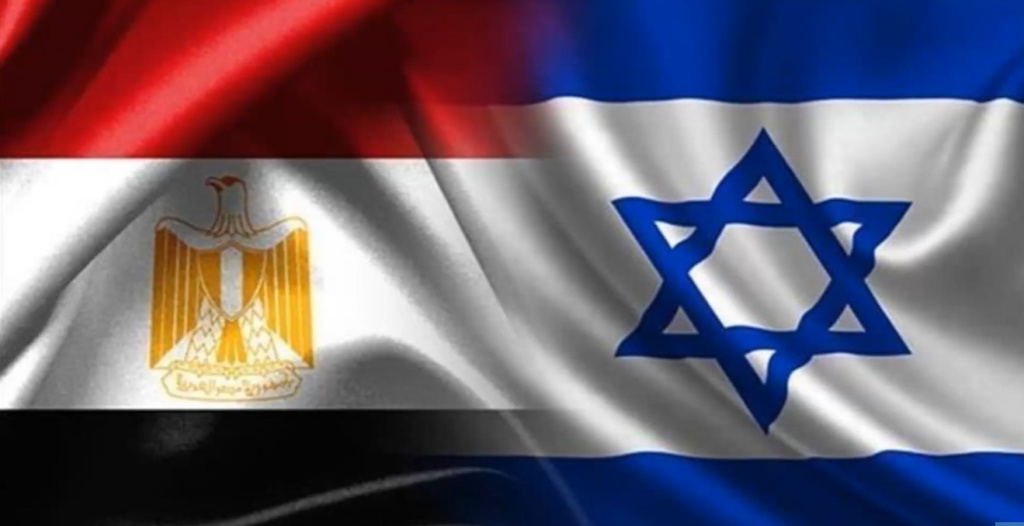
If we are going to criticize someone, it should be the enemy. But what about countries such as Egypt and Jordan, which maintain peace agreements with Israel and are considered allies of the West? Do they genuinely work toward regional stability, or do they also take advantage of Western misunderstandings in order to project an image that differs from their actual interests?
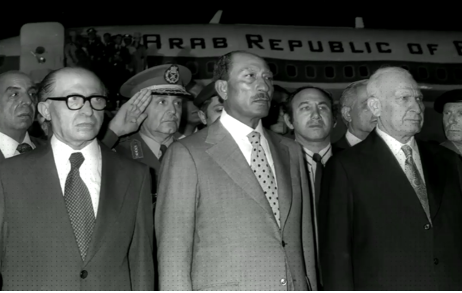
These two countries have managed to maintain a cold but functional relationship with Israel, particularly in the areas of security and trade. Egypt, for example, requested Israeli military cooperation to combat ISIS in the Sinai Peninsula, receiving intelligence support and military assistance. Likewise, Israel has cooperated with Egypt in various fields, including natural gas supplies, water desalination technologies, tourism development, and the exchange of expertise in addressing the COVID-19 pandemic in 2020.
Source: Israel en Español
However, at the same time, the Egyptian government has been accused of allowing or encouraging antisemitic discourse in different areas of public life for political purposes. This is partly due to the fact that opposition to Israel continues to serve as a source of legitimacy among broad sectors of Arab societies and as a tool that strengthens political narratives in support of the Palestinian cause. This position also provides political prestige at Islamic world summits, where several governments seek to present themselves as the primary defenders of the creation of a Palestinian state.
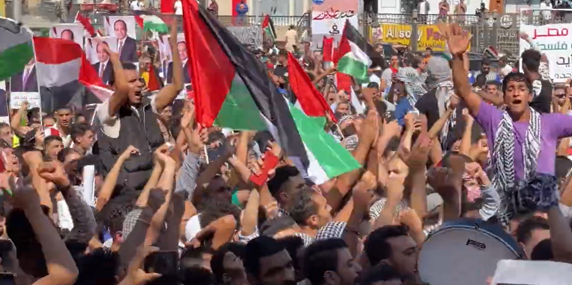
Protests in Egypt against Israel. Suorce: Diario ABC
Nevertheless, when the moment arrived to assume the costs of war, Egypt kept the Rafah border crossing closed during different periods of the conflict, limiting the exit of numerous Palestinians seeking refuge. At the same time, slogans such as “Death to Israel” continued to be heard in the streets, reflecting a profound contradiction between political rhetoric, diplomatic relations, and the reality on the ground.
The Fatal Illusion of Combining Democracy and Religion
Within international political discussions, Western countries aligned with Trump’s current policies overlook the fact that, although his discourse may differ from that of previous leaders and governments with opposing political orientations such as Democrats and Republicans both sides made the same mistake: believing that their foreign policy could successfully introduce Western values into radical Islamic countries.
Both Barack Obama and Donald Trump, despite belonging to very different ideological camps, attempted to address this challenge not only with Islamic countries opposed to the United States, such as the Shia axis led by Iran, but also with the Sunni axis, a Western ally led by Saudi Arabia.
The institutional structures of these two Middle Eastern powers often create the appearance of democratic systems, with parliaments and governments that, at least formally, resemble those of democratic states.
Iran, a country viewed by many as a model of political resistance and whose leadership is defended by various sectors, bases its laws and policies on the doctrine of Wilayat al-Faqih, a Shia Islamic theory proposed by Ruhollah Khomeini. This doctrine argues that, in the absence of the Mahdi, government should be led by an Islamic jurist with religious and political authority to guide and supervise society according to divine law.
Under this framework, popular sovereignty remains limited, as religious authority is placed above democratic decision-making. Elections exist, but they are restricted and do not encompass all areas of political power. At the local level, for example, they may be reduced to administrative matters, such as the selection of neighborhood committees in Tehran.
A similar situation can be observed within the Sunni axis led by Saudi Arabia, where several governments are influenced by monarchies such as those of Jordan, Morocco, and Bahrain. These countries have parliaments that function as legislative bodies; however, behind these institutions, many political decisions continue to be shaped by the interests of powerful families (hamulot) and tribes with historical and territorial influence.
As we can observe, both axes present profound differences, and every American administration, whether Republican or Democratic, has attempted to promote within Middle Eastern political culture certain democratic values considered fundamental within the modern Western model. However, both Trump and his predecessors, as well as their political opponents, failed to achieve a transformation of such magnitude.
It is important to remember that different Western governments arrived in the region with an initially favorable attitude toward the possibility of political transformation. Some administrations adopted more rigid approaches, while others pursued more moderate policies, but all shared the intention of promoting changes that were largely rejected and continue to be rejected by different Sunni and Shia sectors.
According to certain interpretations of political Islam, the introduction of external elements may be perceived as an influence capable of altering the religious and cultural identity of believers, generating resistance toward changes considered a threat to Islamic traditions.
One example of this difficulty occurred in 2007, when the international community supported the Palestinian electoral process in which Hamas participated. From the perspective of Western democracy, allowing all political actors to participate in elections reflected the principle of popular representation. However, some Palestinian leaders, including Mahmoud Abbas (Abu Mazen), warned about the risks of allowing an organization with its own political, military, and religious structure to use the democratic system as a means of expanding its power.
Following Hamas’ electoral victory, the internal Palestinian conflict resulted in a political division that continues to have profound consequences, particularly in Gaza.
Conclusion
The experience of the past decades demonstrates that the failure of Western policies in the Middle East cannot be attributed solely to a particular political ideology or party. Both left-wing and right-wing governments in the West have faced the same fundamental challenge: in the eyes of many actors throughout the region, the West continues to be perceived as an external force with its own values, interests, and political models, regardless of whether its representatives are Republicans, Democrats, conservatives, or progressives.
Perhaps the challenge for the West should not be limited to attempting to transform the Middle East according to its own standards, but rather to developing a deeper understanding of the region’s history, political culture, and social structures.
This does not mean abandoning Western values, but rather recognizing that sustainable change cannot be imposed from the outside; it must emerge from the realities of each society. A more effective approach would require less naivety and greater awareness of the internal dynamics of each country, creating strategies that respond to the needs and particular characteristics of the region instead of attempting to reshape the Middle East according to a model that the West considers universally applicable.
Ultimately, the Middle East is not a chessboard that can be redesigned according to external expectations. It is a complex region shaped by centuries of history, religion, identity, tribal relationships, and political traditions. Any foreign policy that seeks lasting results must first understand these realities before attempting to change them.
The lesson for the West is not that its values lack importance, but that values alone are not enough to transform societies. Diplomacy requires understanding, patience, and the ability to recognize that different cultures may organize political life according to different principles.
Whether the government in Washington is led by the left or the right, the perception from much of the Middle East remains the same: the West is still the outsider. The real challenge is therefore not simply deciding what the West believes is best for the region, but building a strategy that takes into account what the region itself considers possible, realistic, and acceptable.